Latest Reflections
15 published
Institutional Leadership
Thembekile Phylicia Makhubele: Institutional Architect and Organisational Performance Management, Effectiveness and Governance Specialist • 29 Jun 2026
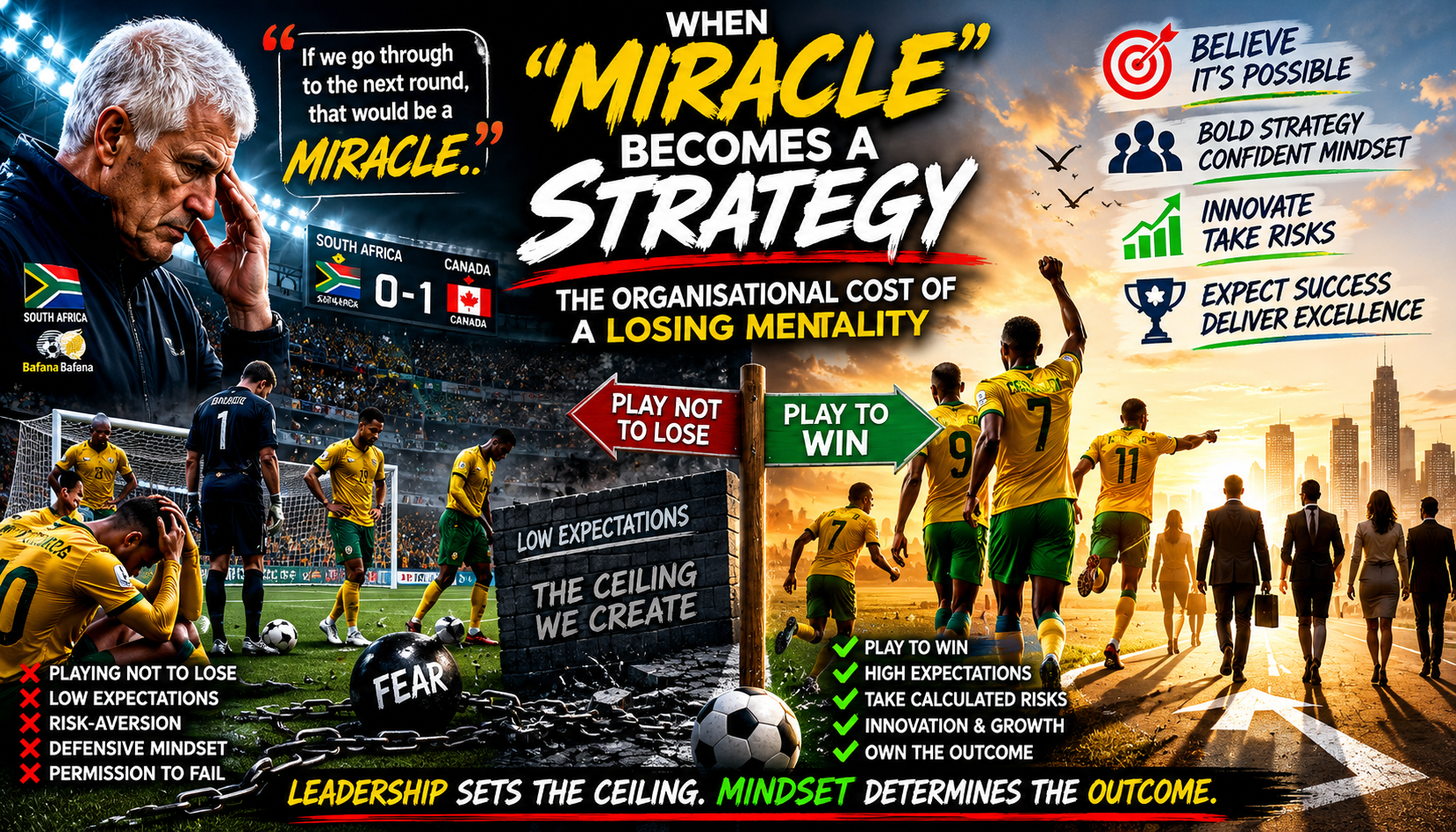
When “Miracle” Becomes a Strategy: The Organizational Cost of a Losing Mentality
South Africa’s World Cup exit offers a powerful leadership lesson: the greatest ceiling on organisational performance is often not talent or resources, but the expectations leaders create. When success is framed as a miracle rather than a target, organisations begin playing not to win, but simply not to lose.

Organisational Health & Wellness
Thembekile Phylicia Makhubele :Founder, Institutional architect, Governance and Organisational Effectiveness Specialist • 17 Jun 2026
REFLECTIONS ON STRENGTH: LESSONS FROM "GIANT" ON REDEFINING MASCULINITY IN LEADERSHIP
They called him "Giant." A businessman. A village school founder. A man who never cried until they denied his sister a dignified funeral. That day, I learned silence isn't strength. Toxic masculinity suppresses. Healthy masculinity heals. This Father's Day, I reflect on the leaders who listen, admit fault, and build cultures of dignity not dominance.
Governance
Thembekile Phylicia Makhubele institutional Architect, Organisational Transformation, Governance and Organisational Sp • 01 May 2026
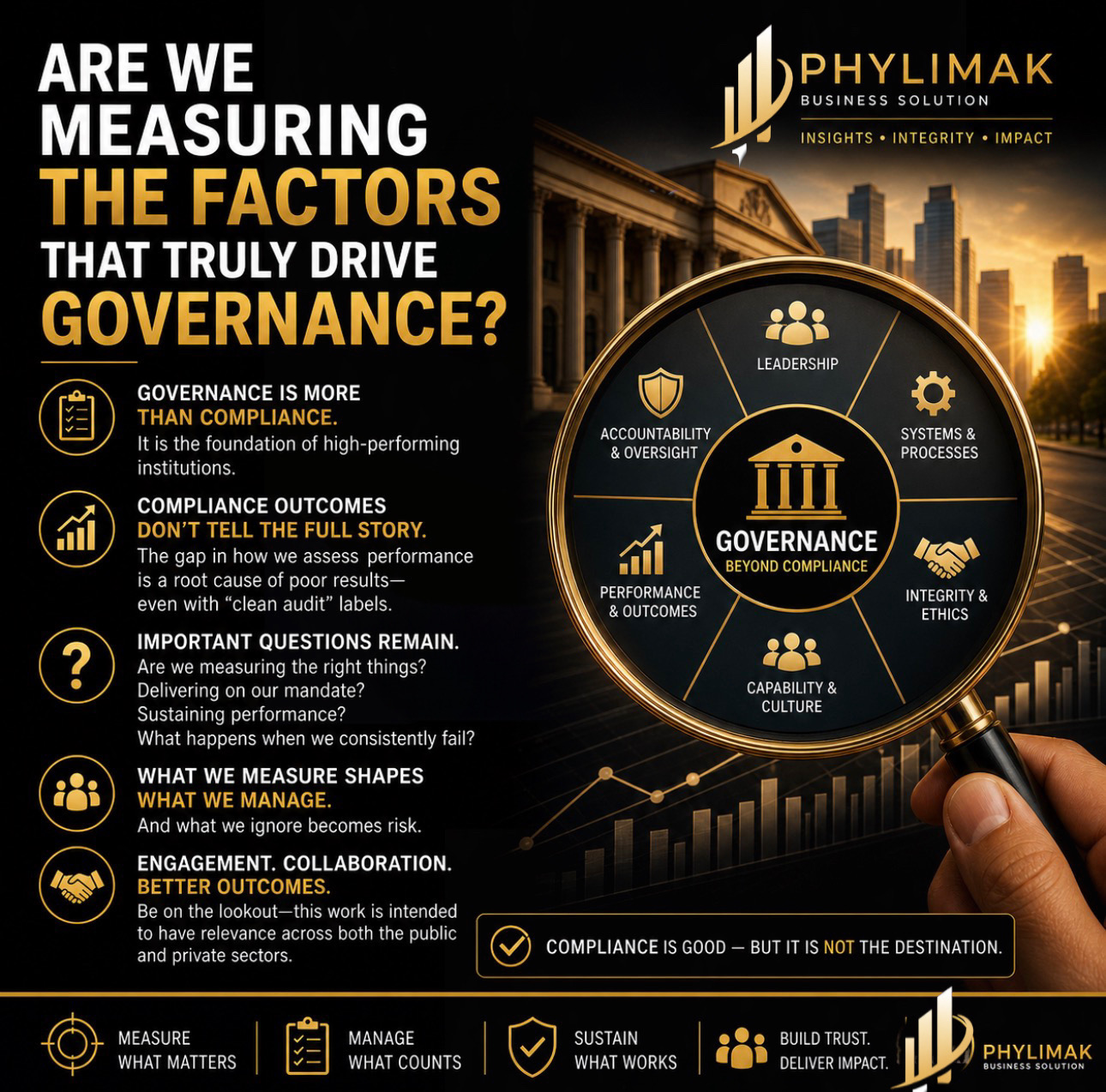
ARE WE MEASURING THE FACTORS THAT TRULY DRIVE GOVERNANCE?
Compliance is not the goal, it is the baseline. * Governance beyond compliance * Measuring what truly matters * Linking performance, ethics, systems, and leadership
Governance
Thembekile Phylicia Makhubele institutional Architect, Organisational Transformation, Governance and Organisational Specialist • 20 Apr 2026
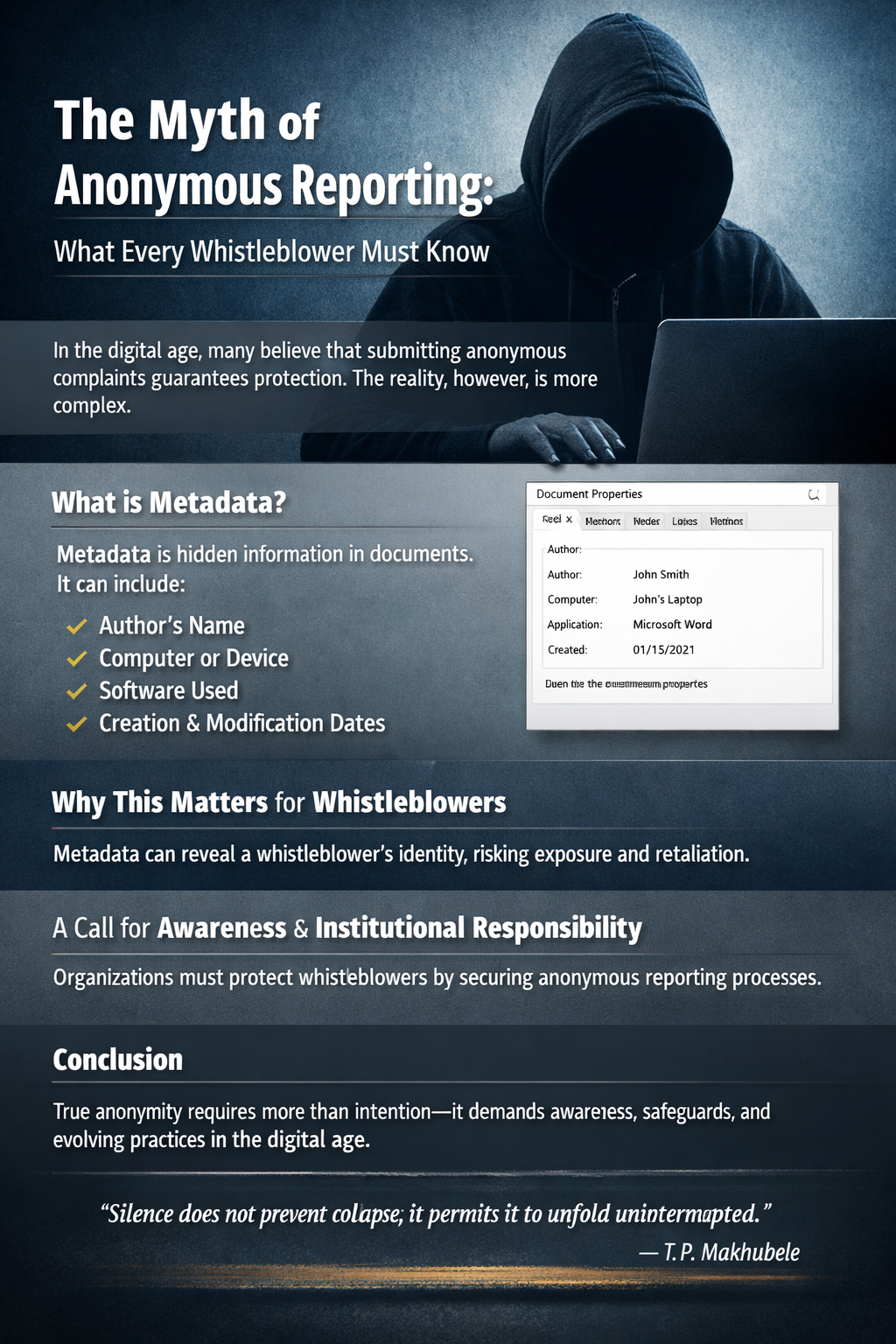
ETHICAL REPORTING, WHISTLEBLOWING & DIGITAL RISK IN MODERN ORGANISATIONS : The Myth of Anonymous Reporting: What Every Whistleblower Must Know
Did you know? Submitting a complaint anonymously especially as a PDF does not always guarantee your identity is protected.

Organisational Health & Wellness
Thembekile Phylicia Makhubele: Institutionsl Architect, Governance and Organisational Effectiveness Specialist • 19 Apr 2026
“WE WILL PROCESS YOU OUT.”
The "Processed Out" Framework 1. The Definition: Institutional Erasure "Processing out" is not a HR failure; it is a design choice. It is the transition from Performance-Based Management to Compliance-Based Removal. The Method: Leveraging "policy frameworks" to achieve personal or political ends. The Shield: Administrative hurdles that make a targeted exit look like a series of unfortunate, bureaucratic coincidences. 2. The Mechanics of the "Machine" Manufactured Urgency: Suddenly, minor oversights from three years ago become "critical performance failures" requiring immediate escalation. The Double Standard: Policy is a straightjacket for the "fallen from grace" but a safety net for the "aligned." The Paperwork Paradox: If you can’t find a reason to fire someone, you simply "process" them until the environment becomes untenable or the legal boxes are technically checked. 3. Health vs. Transformation (The Core Tension) As a Health Crisis: It is an autoimmune disorder. The organisation’s "protective" policies are used to destroy its most vital assets the truth-tellers and the brave to protect the ego of the hierarchy. As a Transformation Perversion: It is Change by Churn. Instead of authentic cultural evolution, leadership uses "the process" to purge dissent, creating a sterile environment of "yes-people" under the guise of "modernisation."
Governance
Thembekile Phylicia Makhubele Institutional Architect | Organisational Transformation | Governance and Organisational Effectiven • 24 Mar 2026
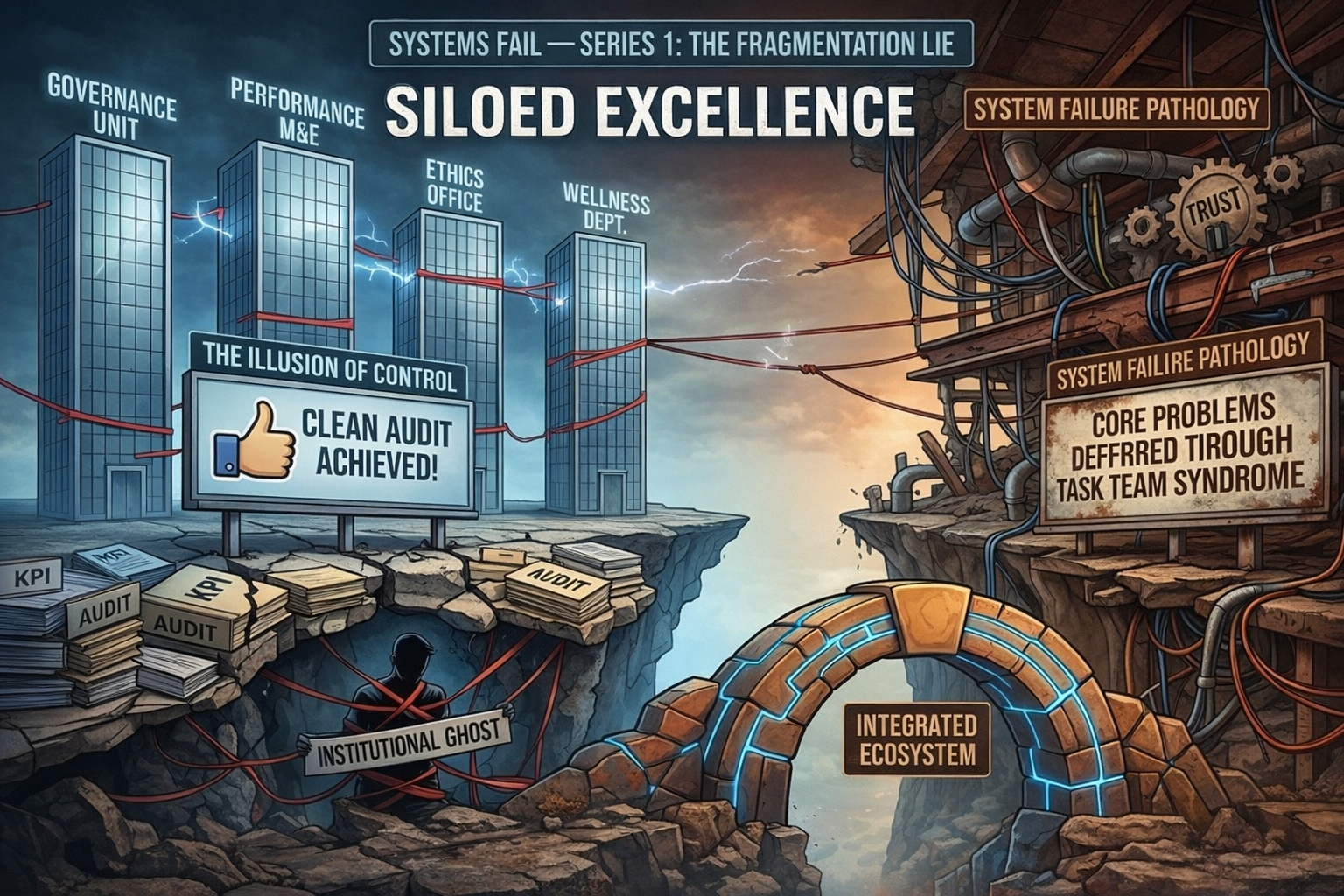
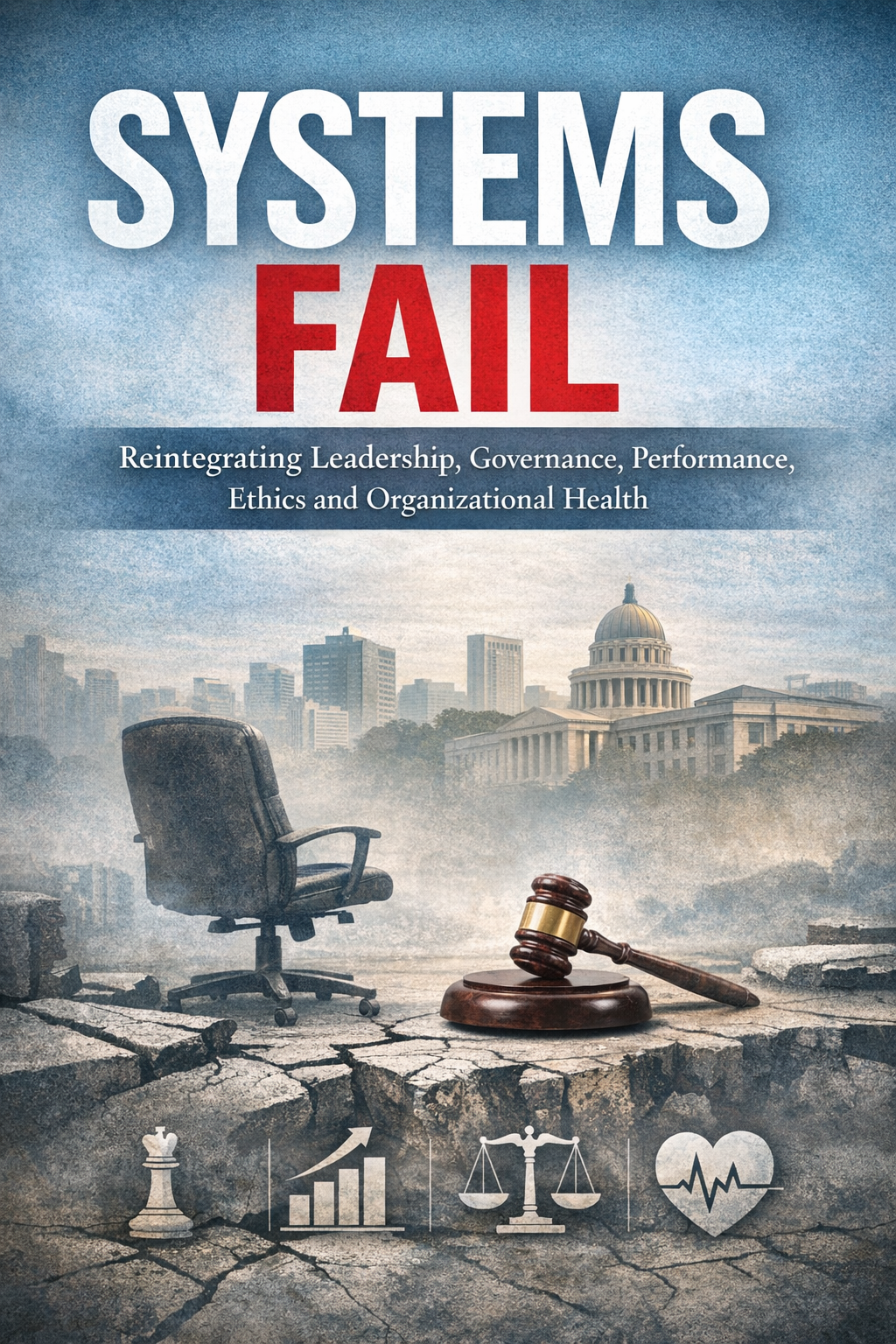
SYSTEMS FAIL-SERIES 1 : The Fragmentation Lie: Why “Siloed Excellence” is Institutional Self-Sabotage
Fragmentation is often misdiagnosed as a governance failure. In reality, it is a failure of institutional architecture, a condition in which leadership, governance, performance, ethics, and organisational health operate in isolation rather than as an integrated system.
Organisational Transformation
Thembekile Phylicia Makhubele Institutional Architect | Organisational Transformation | Governance & O • 15 Mar 2026
SYSTEMS FAIL -series (10 parts) When Leadership, Governance, Performance, Ethics and Wellness Are Treated as Separate Conversations
A 10-Part Thought Leadership Series: Institutions rarely collapse suddenly. They decline gradually often while appearing stable on paper. This series explores how fragmentation between leadership, governance, performance systems, ethics and organisational health weakens institutions from within. Drawing on more than three decades of leadership experience across public institutions, the SYSTEMS FAIL series examines the hidden patterns that undermine organisational effectiveness and proposes ways to restore institutional coherence.
Organisational Health & Wellness
Thembekile Phylicia Makhubele : institutional Architect, Organisational Transformation and Effectiveness Specialist • 15 Mar 2026
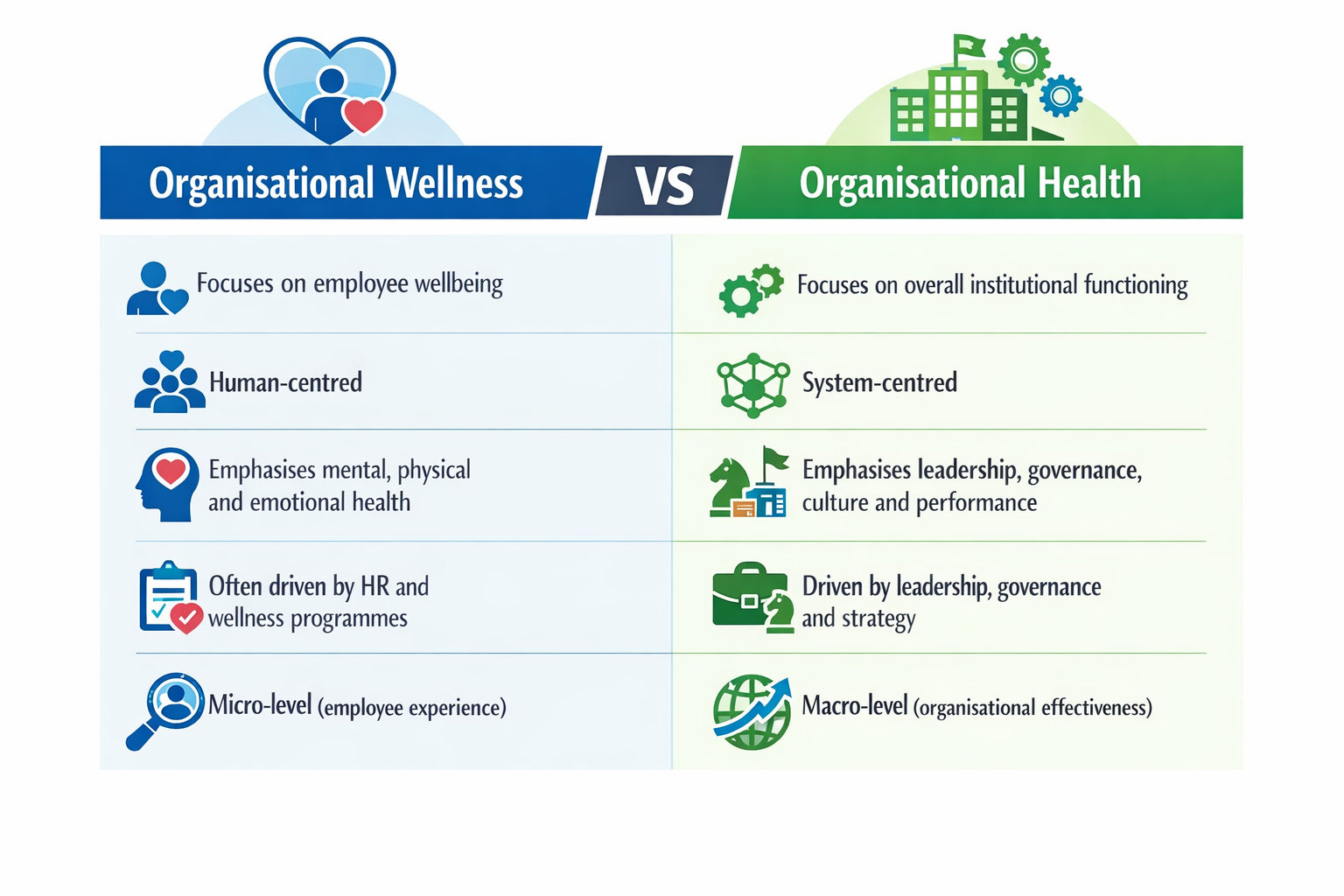
A NEED FOR ORGANISATIONS TO DIAGNOSE ORGANISATIONAL HEALTH BEFORE PRESCRIBING WELLNESS PROGRAMMES?
As organisations invest more in wellness programmes, a critical question arises: should this happen without first assessing organisational health? Wellness initiatives matter, but if leadership, governance and systems remain weak, they may treat symptoms rather than causes. Sustainable wellbeing requires attention not only to people, but to the health of the organisation itself.
Organisational Health & Wellness
Thembekile Phylicia Makhubele: Institutional Architect, Organisational Transformation and Effectiveness Specialist • 15 Mar 2026
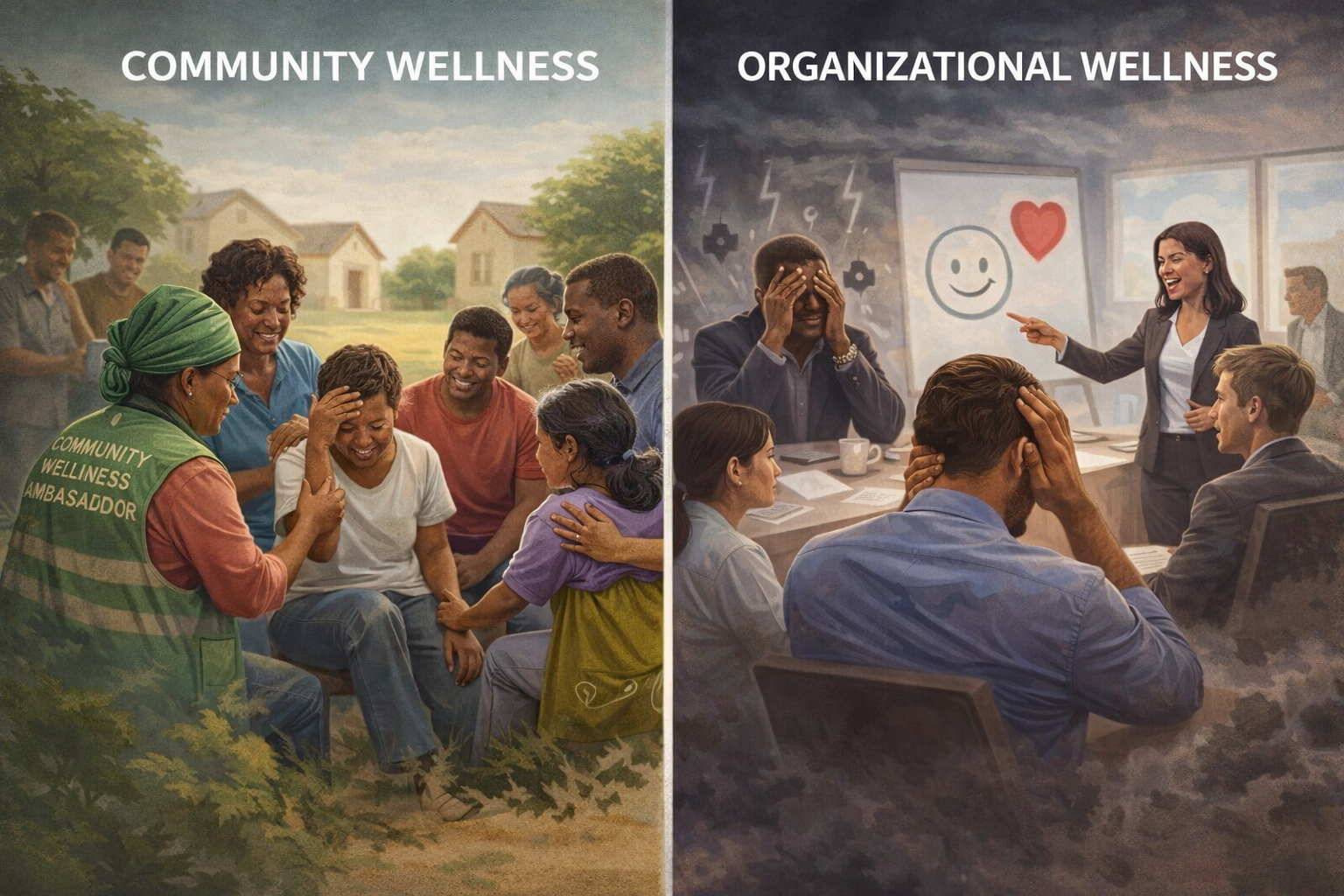
COMMUNITY WELLNESS vs ORGANISATIONAL WELLNESS
This analysis argues that organizational wellness must pivot from an "end-of-pipe" solution to addressing "upstream" community factors, shifting focus from fixing employees to healing the social, environmental "soil" they grow in. Grounded in social learning theory and the South African NDP 2030, the piece proposes "Community Wellness Ambassadors" as a tangible mechanism to foster corporate and societal healing. You can read the full analysis in the provided text.