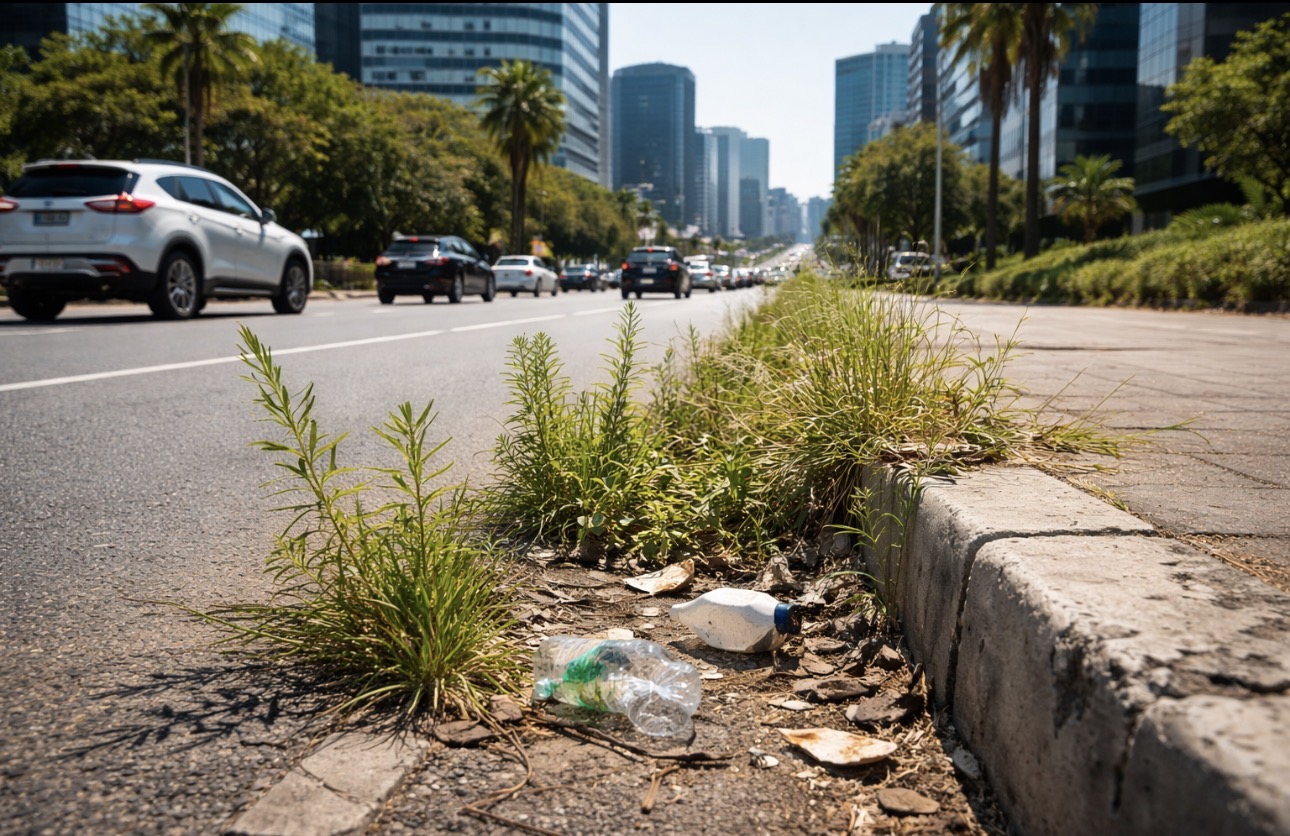
Observations:
In urban environments, small signals often reveal the health of institutions.
Recent observations along some major streets in Sandton, Johannesburg, where weeds have begun growing along road edges without timely clearing, raise an important governance question. While such issues may appear minor, they often reflect deeper operational challenges within municipal service delivery systems.
The contrast becomes more visible when compared with cities such as Cape Town, where routine maintenance in both upmarket and ordinary suburbs tends to be more consistently maintained. The difference is not merely aesthetic — it points to variations in how municipal governance systems monitor and sustain basic operational standards.
At first glance, maintenance lapses are often attributed to capacity constraints. However, from a governance perspective, the issue is frequently less about capacity and more about systems of accountability, operational oversight, and institutional discipline.
Municipal governance is not only about large infrastructure projects or policy frameworks. It is equally about the routine operational practices that ensure public spaces are maintained, problems are identified early, and service delivery standards are consistently upheld.
When these systems weaken, the effects accumulate over time. Neglected public spaces can contribute to safety concerns, undermine investor confidence, and gradually erode public trust in municipal institutions.
Strengthening municipal service delivery therefore requires attention to the governance systems that support everyday operations.
Improvement can often be achieved through relatively practical institutional measures, including:
- Clear maintenance schedules with defined accountability for specific zones
- Routine monitoring of service delivery standards
- Data-informed tracking of maintenance activities
- Early identification of emerging service delivery gaps
- Leadership accountability for operational performance
These may appear to be simple management practices, but they are central to sustaining institutional effectiveness.
At Phylimak Business Solution, the view is that effective institutions are built not only through strategic planning but through governance systems that translate policy into daily operational practice. Strengthening organisational accountability, performance monitoring, and ethical leadership enables institutions to detect service delivery risks early and respond before they become visible signs of institutional decline.
When basic maintenance challenges become visible in major economic centres, they should be seen as an opportunity to strengthen governance systems rather than simply as operational shortcomings.
Because when weeds begin to grow unchecked in the heart of a city, the issue is rarely just about vegetation
It is often a signal that institutional attention needs to be restored.